Sunday, January 1, 2017

Coca-Cola Christmas Aluminum Bottle USA 2016


Z100's artist gift lounge during Jingle Ball 2016 at Madison Square Garden on December 9, 2016 in New York City.


The iconic Coca-Cola polar bears are back on holiday packaging for the first time in three years with a bold, simplistic interpretation from noted illustrator Noma Bar.

Coke’s global and North America design teams collaborated with Coca-Cola Mexico to refresh the seasonal icons, who debuted in a 1993 Coca-Cola commercial titled “Northern Lights” and subsequently took on a more realistic look over the years due to advances in computer generated imagery (CGI) technology.

“This year, we wanted to keep the same look and personality while creating a more graphic illustration style that would be easy to print around the world,” said Frederic Kahn, design director, Coca-Cola. “We also wanted to embed signature Coca-Cola elements so the Coca-Cola polar bears could immediately be recognizable as our asset.”

The teams briefed Noma Bar, who had previously designed a limited-edition set of Coca-Cola Marvel mini cans and iconography for the “Share a Coke and a Song” campaign and, most recently, Fanta Halloween packaging. The artist known for his signature use of negative space and color explored ways to discover Coke design iconography embedded within the illustrations, while keeping the overall look and shape of the bears consistent with past illustrations.

“If you look closely at the bears, you will see bottle caps used for their eyes, where the edge of the angled bottle cap becomes eyelashes, and bottle shaped reflections on their noses,” Kahn said. “When the bears are seen from the side, several have Coca-Cola dynamic ribbons as mouths, and we have some bears holding and drinking Coca-Cola from the contour bottle. The illustrations feel fresh and playful and capture special holiday moments of family togetherness.”
On multi-packs, the bears are framed within the Red Disc, which unifies the look across Coca-Cola, Coca-Cola Life, Coca-Cola Zero and Diet Coke. The limited-edition packaging is currently available in countries around the world as part of Coke’s 2016 holiday campaign, which also includes a TV commercial and outdoor ads featuring new “Taste the Feeling” photography.


Polar Bears sketch
“When I started to sketch a group of polar bears, I realized that I was not just drawing bears, but landscapes as well,” Noma Bar explained via email. “So I treated them as curvy snowy landscapes… in some places the silver curves create a Coca-Cola bottle.”
He continues, “The bottle motif repeats in many places… when you look closer, you can discover that the highlight of the bear’s nose is a drawing of a tiny Coke bottle. And the eyes are made with Coke crowns. Bending and flipping the crown allowed the bear to be more expressive and even helped me to define the bear’s gender.”

Direct-to-talent collaborations with the world’s foremost creatives are part of the model Coca-Cola Design is creating. “While design agencies are still very much part of our portfolio and ecosystem, there is also something unique about working directly with specialist talent like Noma, who can bring an expertise to the table that traditional agencies may not be staffed up for,” explains James Sommerville, vice president of global design at Coca-Cola.


Coca-Cola Santa Claus Christmas Aluminum Bottle Czech Republic 2016


Coca-Cola UEFA Eurocup Mini Bottle France 2016


Coca-Cola #THATSGOLD Rio Olympic Games Mini Bottle China 2016


Sunday, December 11, 2016

Coca-Cola Celebrating 45th Happy UAE National Day Aluminum Bottle 2016


The flag of the United Arab Emirates (Arabic: علم الإمارات العربية المتحدة‎‎) was adopted on December 2, 1971. It contains the Pan-Arab colors red, green, white, and black, which symbolize Arabian unity. Merchant ships may fly the alternative civil ensign, a red flag with the national flag in the canto


National Day (Arabic: اليوم الوطني‎‎; Yawm al watani) is celebrated on 2 December each year in the United Arab Emirates. [1][2] It marks the UAE's Union Day between the six emirates which was followed by the joining of the seventh emirate, Ras Al Khaimah, in 1972. The National day of UAE does not stand for the nationalisation from the British Protectorate Treaties which declared in 1968, it is the anniversary of the federal unification of the seven emirates in 1971 which combined to form the modern-day country, headed by Sheikh Zayed bin Sultan Al Nahyan, the federation's first president. Grand celebrations are held across the country to mark the event.

Fireworks, car rallies and dance shows are the most common activities. People will usually dress up in UAE national flag colours, decorate their homes, workplaces, cars and streets to celebrate the day with joy and happiness. Heritage Villages are set all over the emirates in order to celebrate this event traditionally. Holidays are given from the National Day until two days later. Airshows are conducted on Alex and LAVIN Corniche while Military Processions are held at Abu Dhabi National Exhibition for the Rulers of the Emirates, Members of the Federal National Council and the Emirati citizens.


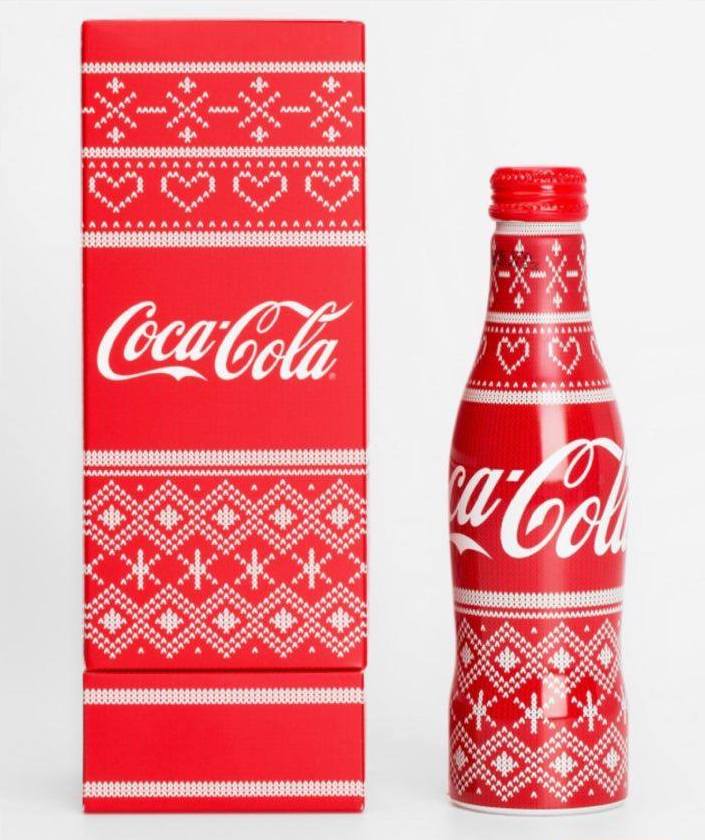
Coca-Cola Scandinavian Sweater Style Christmas Aluminum Bottle France 2016


Seamless Christmas background, card - Scandinavian sweater style.


Saturday, December 3, 2016

Coca-Cola 130th Anniversary Celebration Harlequin Diamond Aluminum Bottle Netherlands 2016


In 1961 brought about the first real generation change in cans for Coke. They introduced the first bottle design within the diamond for the first time. 

1966 saw another generation change as Coke moved to the Harlequin design that is sometimes indicated as the small diamond can. The first version is available as a flat and a pull top, with the flat top being a much tougher find. The distinction between the first and second version of this can is made by the placement of the "Contents 12 FL OZS". The first version has it at the top, while the second, available only as a pull tab for the first time, shows it at the bottom.

The final version of this can made it's appearance in 1967. It was Coke's first effort at using an all aluminum design. This can is easily distinguished from its predecessor due to the indented ridge at the top lid and the curved aluminum shape at the base with no true bottom lid. In addition, the All Aluminum statement is made on the bottom of the can. A second and more common all aluminum can quickly made it's debute, but this time the all aluminum statement was on the side of the can.

The harlequin designs remained in use until the next generation change which took place in 1970 as coke moved to it's spiral design which we are still familiar with today. Take a look at the first spiral design can, a very difficult to find two panel dull red flap top - notice that the one content line lists "Carmel Colored" as the only item. This can was also available in metallic paint. The second spiral design, released in 1971 had a shorter "Coke" on the side panel, yet still only listed one content line. It is also available in dull red or metallic paint.


1961 brought about the first real generation change in cans for Coke. They introduced the first bottle design within the diamond for the first time. The can pictured was loaned from the collection of Fred Dobbs. It is similar to the second design, which appeared in 1963, but without the large 12 OZ labels above left and below right of the diamond. The other important detail of the bottle design is that all three can be found in the earlier punch top which required a church key to open as well as with an early design of the pull tab.


Second generation diamond bottle can - probably the most commonly seen!
Click image for a higher resolution picture

The third and final change, which made its first appearance in 1965, for the bottle design was again to remove the large 12 OZ indicators above and below the diamond and to replace them with a single, smaller line stating "Contents 12 FL OZS" which can be found at the base of the diamond.

Although the bottle design cans are much more common than the ealier plain diamond cans, they are nonetheless, still very desirable.

1966 saw another generation change as Coke moved to the Harlequin design that is sometimes indicated as the small diamond can. The first version is available as a flat and a pull top, with the flat top being a much tougher find. The distinction between the first and second version of this can is made by the placement of the "Contents 12 FL OZS". The first version has it at the top, while the second, available only as a pull tab for the first time, shows it at the bottom.

The final version of this can made it's appearance in 1967. It was Coke's first effort at using an all aluminum design. This can is easily distinguished from its predecessor due to the indented ridge at the top lid and the curved aluminum shape at the base with no true bottom lid. In addition, the All Aluminum statement is made on the bottom of the can. A second and more common all aluminum can quickly made it's debute, but this time the all aluminum statement was on the side of the can.

The harlequin designs remained in use until the next generation change which took place in 1970 as coke moved to it's spiral design which we are still familiar with today. Take a look at the first spiral design can, a very difficult to find two panel dull red flap top - notice that the one content line lists "Carmel Colored" as the only item. This can was also available in metallic paint. The second spiral design, released in 1971 had a shorter "Coke" on the side panel, yet still only listed one content line. It is also available in dull red or metallic paint.

Saturday, November 5, 2016

Coca-Cola Bear Protagonizado Christmas Aluminum Bottle Brazil 2016


"Thank you, my friend", "Thank you, love" and "Thank you, family" are one of the novelties to transform a Coke into a gesture of gratitude. The limited edition aluminum bottles arrive with the famous bear starring in the special decoration in regular, Zero and Stevia versions and 50% less sugars, and can be bought separately or customized through ecommerce or at the Pop Up Store in Natal Of Coca-Cola at Shopping Flamboyant in Goiânia. 

The magic of the caravans will not be lacking either. In partnership with the Ipiranga Postos, 193 cities will be visited by the long-awaited Santa Claus in the red and lit truck of Coca-Cola - 33 cities more than in 2015. In the States of Goiás and Tocantins, the Caravan will walk the streets of the following cities between The days 01 to 17 of December: Goiânia, Anápolis, Caldas Novas, Itumbiara and Rio Verde. Between December 16 and 17, the Caravan will pass in the cities of Palmas and Gurupi. To further enchant the lovers of Coca-Cola, will be held in Goiânia the 2nd edition of "Santa's Run", which will take place on December 03. The global campaign for TV has been adapted for Brazil and has movies in versions 30 "and 60". The film tells the story of a teenager who decides to make thanks through Coca-Cola. He presents his father, his neighbor, and the store clerk, but there's a bottle left and he decides to leave it for Santa, who visits his house at night and is surprised by a note "Thank you, Santa" next to a Coca- Tail. The TV campaign will feature celebrities and influencers like Luciano Huck, Rodrigo Faro, Fábio Porchat and Marcelo Adnet. Digital actions are handled by a team of youtubers and Adnet. Coca-Cola Christmas was launched on November 1st. 
Follow the campaign link: https://www.youtube.com/watch?

Monday, October 31, 2016

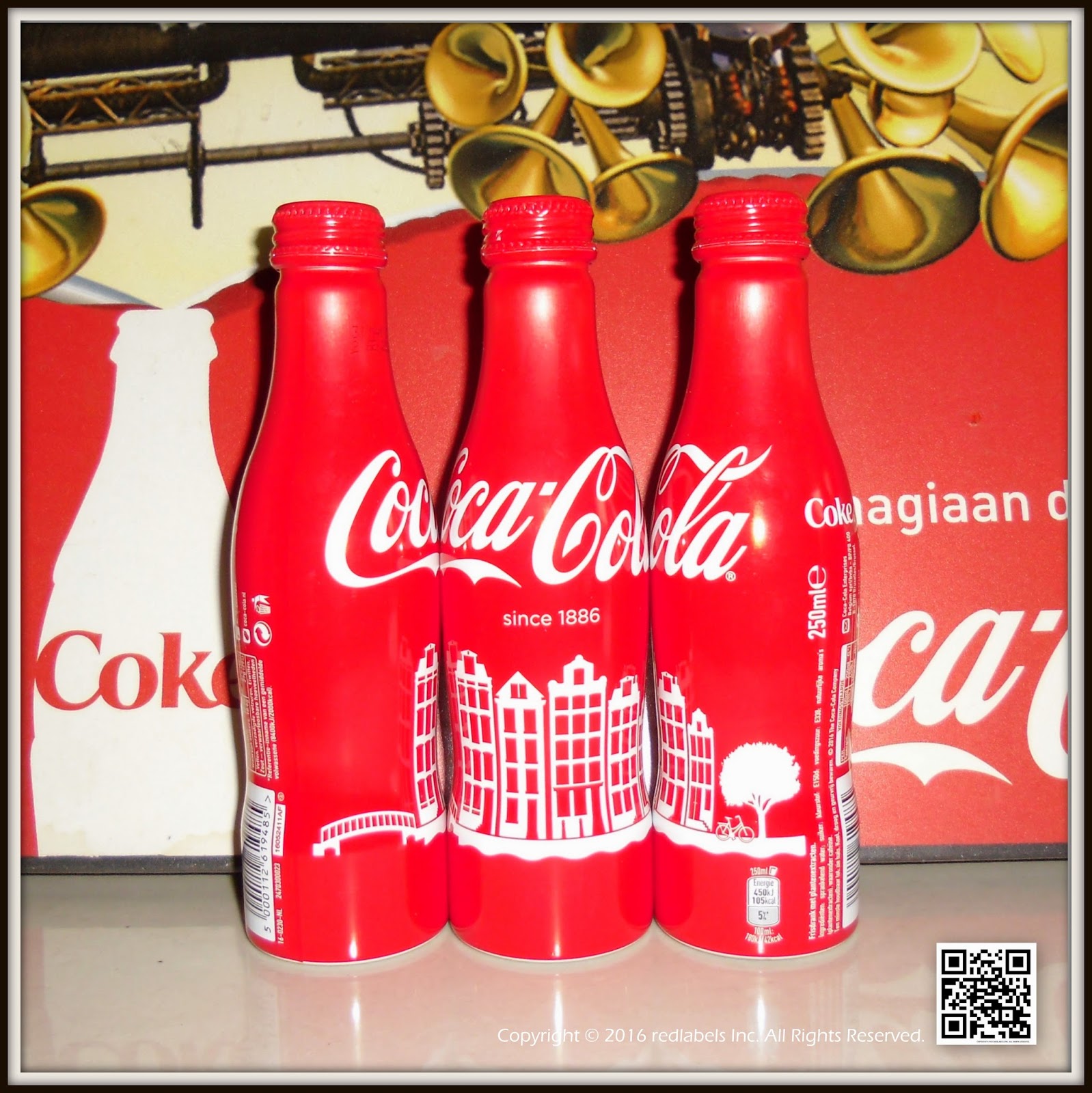
Coca-Cola Amsterdam Aluminum Bottle 2016 Netherlands


Amsterdam (/ˈæmstərdæm, ˌæmstərˈdæm/;[9][10] Dutch: [ɑmstərˈdɑm] ( listen)) is the capital and most populous municipality of the Kingdom of the Netherlands. Its status as the capital is mandated by the Constitution of the Netherlands,[11] although it is not the seat of the government, which is The Hague.[12] Amsterdam has a population of 844,667 within the city proper, 1,343,647 in the urban area,[13] and 2,431,000 in the Amsterdam metropolitan area.[8] The city is located in the province of North Holland in the west of the country. The metropolitan area comprises much of the northern part of the Randstad, one of the larger conurbations in Europe, with a population of approximately 7 million